
If you could take one action tomorrow to think more clearly, what would it be? For many people the instinct is to reach for a compound: a stronger coffee, a supplement, or a prescription wakefulness agent. Yet the interventions with the largest, most consistent, and best-documented effects on cognition are not pills at all. Sleep, exercise, and diet shape the brain’s baseline performance far more than any cognitive enhancer shifts it. This article puts the two approaches side by side, compares the size and reliability of their effects, and explains why the smartest use of an enhancer is as a supplement to lifestyle rather than a substitute for it.
Framing the Comparison Honestly
It is tempting to declare lifestyle the winner and end the discussion, but that would be as lazy as the marketing that oversells enhancers. The two approaches work on different timescales and answer different questions.
A cognitive enhancer changes performance over hours. It is a tool for a specific afternoon, a specific overnight shift, a specific demanding task. Lifestyle interventions change the baseline over weeks to years. They determine how well you think on an ordinary Tuesday with nothing extra in your system.
The fair comparison, then, is not “which is better” but “which effects are larger, how reliable are they, and what does each cost.” On all three counts, the lifestyle interventions come out ahead, with one important exception discussed below.
Sleep: The Intervention Every Enhancer Is Trying to Replace
Sleep is the reference point for the entire enhancement field because most enhancers are, at bottom, ways of tolerating insufficient sleep.
The evidence on sleep and cognition is overwhelming. Restricting sleep to six hours a night for two weeks produces cognitive deficits comparable to two full nights of total deprivation, and people in that state consistently rate themselves as only mildly impaired. Sleep loss degrades working memory, attention, decision-making, emotional regulation, and, crucially, memory consolidation, the process by which what you learned today becomes something you still know next month. No cognitive enhancer improves consolidation; it happens during sleep or not at all.
This is where eugeroics enter. Modafinil, approved for narcolepsy, obstructive sleep apnea, and shift work disorder at 100 to 200 mg in the morning, restores alertness and executive performance in sleep-deprived people toward rested levels. That is a genuine and useful effect for someone who cannot sleep, such as a nurse on a night rotation or a pilot on a long-haul schedule. But two caveats apply. First, restoration is not enhancement: a sleep-deprived person on modafinil performs roughly like a rested person off it, not better. Second, modafinil’s half-life of roughly 12 to 15 hours means that using it to extend a day tends to shorten the following night, compounding the deficit it was masking.
The practical conclusion is simple. If you are sleeping fewer than seven hours, the highest-yield cognitive intervention available to you is more sleep, and it costs nothing. An enhancer becomes rational only when adequate sleep is genuinely impossible, and even then it should be a bridge rather than a lifestyle.
Exercise: The Closest Thing to a Nootropic That Is Not a Drug
Aerobic exercise has an evidence base for cognition that most supplements can only envy.
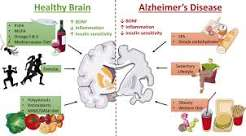
Trials in older adults show that months of regular aerobic activity increase hippocampal volume and improve memory, one of the few interventions with imaging evidence for structural brain change. In younger adults, single bouts of moderate exercise improve attention, processing speed, and executive function for one to two hours afterward, an acute effect that rivals a moderate caffeine dose. Regular exercise also improves sleep quality, reduces anxiety and depression, and lowers cardiovascular risk, each of which independently supports cognition.
The mechanisms are reasonably well understood: increased cerebral blood flow, elevated brain-derived neurotrophic factor, improved insulin sensitivity, and reduced inflammation. Where a nootropic supplement typically claims to act on one of these pathways, exercise acts on all of them at once.
Compared with enhancers, exercise has larger long-term effects, no tolerance, no legal complications, and side effects that are almost entirely beneficial. Its disadvantage is that it requires time and effort, and its acute cognitive boost is shorter than a eugeroic’s. For a single long exam or deadline, a pill is more convenient. For a career, exercise is the better investment by a wide margin.
Diet: Large Effects for the Deficient, Small for Everyone Else
Diet’s relationship to cognition is more nuanced than either sleep’s or exercise’s, and it is where enhancer marketing most often blurs the line.
Correcting a genuine deficiency produces large cognitive gains. Low iron, low vitamin B12, low omega-3 intake, and dehydration all impair attention and memory, and fixing them restores function. This is also why supplements like creatine, omega-3s, and B vitamins show cognitive benefits in some trials: the participants who benefited were often the ones who started out low. Those same supplements do little for people already eating well.
Overall dietary pattern matters too. Diets rich in vegetables, fish, whole grains, and olive oil are associated in observational studies with slower cognitive decline, though randomized evidence is thinner. Highly processed, high-sugar diets are associated with worse cognitive outcomes and with the energy crashes that make people reach for an alertness booster in the first place.
The point of comparison with enhancers is subtle. A smart drug can make a poorly nourished person feel alert, but it cannot fix the impaired baseline that poor nutrition creates. Conversely, a good diet will not make a rested, well-fed person noticeably sharper on a given afternoon the way modafinil can. Diet sets the floor; enhancers work on the ceiling for a few hours.
Head-to-Head: Effect Size, Reliability, and Cost
Putting the pieces together, here is a fair comparison of the major options.
| Intervention | Typical cognitive effect | Timescale | Reliability of evidence | Main cost |
| Adequate sleep | Large restoration of all domains | Nightly | Very strong | Time |
| Regular aerobic exercise | Moderate long-term, modest acute | Weeks to years | Strong, including imaging | Time and effort |
| Balanced diet, deficiency correction | Large if deficient, small otherwise | Weeks | Moderate to strong | Attention to eating |
| Modafinil or armodafinil | Modest on complex tasks; large restoration when tired | Hours | Moderate to strong | Prescription, side effects, sleep displacement |
| Caffeine | Modest on alertness and reaction time | Hours | Very strong | Tolerance, sleep disruption |
| Most supplements | Small or none in well-nourished adults | Weeks | Weak | Money |
Two conclusions stand out. The lifestyle interventions have larger and more durable effects on baseline cognition than any enhancer, and they compound over time rather than requiring re-dosing. But for acute situations, particularly involuntary sleep loss, a wakefulness-promoting agent has a real and reasonably well-documented role that lifestyle cannot fill in the moment.
Where Enhancers Genuinely Earn Their Place
Being fair to the pharmacological side means naming the situations where it wins.
- Unavoidable sleep disruption. Night-shift healthcare, emergency response, and long-haul transportation involve schedules that no amount of sleep hygiene can fix. Modafinil and armodafinil are approved for shift work disorder for exactly this reason.
- Diagnosed sleep disorders. Narcolepsy and sleep apnea cause daytime sleepiness that sleep, exercise, and diet alone cannot resolve. Eugeroics are first-line treatment.
- Brief high-stakes windows. A single demanding task, such as a long exam or a critical presentation, where a modest edge on complex thinking matters and the sleep cost can be absorbed afterward. This is elective use and carries legal and medical considerations, but it is the scenario where enhancement evidence is strongest.
Outside these, the marginal benefit of an enhancer over a well-rested, active, well-fed baseline is small, and the risk of using it to avoid fixing the baseline is large.
Adrafinil, the discontinued prodrug converted to modafinil in the liver, deserves a brief mention only as something to avoid in every scenario: slower and less predictable than modafinil, with liver-enzyme concerns on chronic use and no quality oversight in its current gray-market form.
Combining the Two Sensibly
The most effective approach is not choosing between enhancers and lifestyle but sequencing them.
- Fix sleep first. Consistent timing, seven to nine hours, no screens or stimulants late. Most people who think they need an enhancer discover they needed this.
- Add exercise. Even three sessions a week of moderate aerobic activity improves attention, mood, and sleep within weeks.
- Audit diet for deficiencies and crashes. Regular meals, adequate protein, hydration, and, where relevant, iron, B12, and omega-3 status.
- Use caffeine strategically. Moderate doses, before noon, with L-theanine if anxiety is an issue.
- Reserve eugeroics for genuine need. Under medical supervision, for diagnosed conditions or unavoidable shift disruption, taken early in the day so they do not steal the next night’s sleep.
A brief responsible-use note: eugeroics are prescription medications in most countries with rules that vary by jurisdiction, they interact with common drugs, and none of them substitutes for the sleep that every cognitive function ultimately depends on. Persistent tiredness despite good habits is a reason to see a doctor.
FAQ
Is modafinil better than a good night’s sleep? No. In sleep-deprived people, modafinil restores performance toward rested levels, but it does not exceed them and does nothing for memory consolidation, which only occurs during sleep.
Can exercise really compete with a cognitive enhancer? For long-term baseline cognition, exercise has stronger evidence, including brain-imaging studies. For a single afternoon, a eugeroic or caffeine produces a more immediate effect. They answer different questions.
Which lifestyle change has the fastest cognitive payoff? Sleep. A single full night after a period of restriction produces a noticeable improvement in attention and mood. Exercise and diet effects build over weeks.
Do supplements count as lifestyle or enhancers? Somewhere in between. Supplements that correct a deficiency are closer to diet and can have large effects. Supplements taken by well-nourished people hoping for an edge behave like weak enhancers, with small or no effects.
Is there any situation where an enhancer is the right first choice? Diagnosed sleep disorders and unavoidable shift work are the clearest cases. There, a prescribed eugeroic addresses a problem that lifestyle alone cannot, and it should be combined with the best sleep habits the schedule allows.
Final Thoughts
Cognitive enhancers and lifestyle interventions are not rivals so much as tools with different jobs. Sleep, exercise, and diet set the baseline from which all thinking proceeds, and their effects are larger, more durable, and better documented than anything available in a capsule. Enhancers like modafinil operate on top of that baseline for a few hours, and their most defensible use is restoring function when sleep is genuinely unavailable or when a medical condition impairs it. The mistake is not using an enhancer; the mistake is using one to avoid the lifestyle work that would make it unnecessary most of the time. Build the foundation first, and you will find you need the tools far less often than you thought.
For more topic guides and related resources, visit Modavance.